
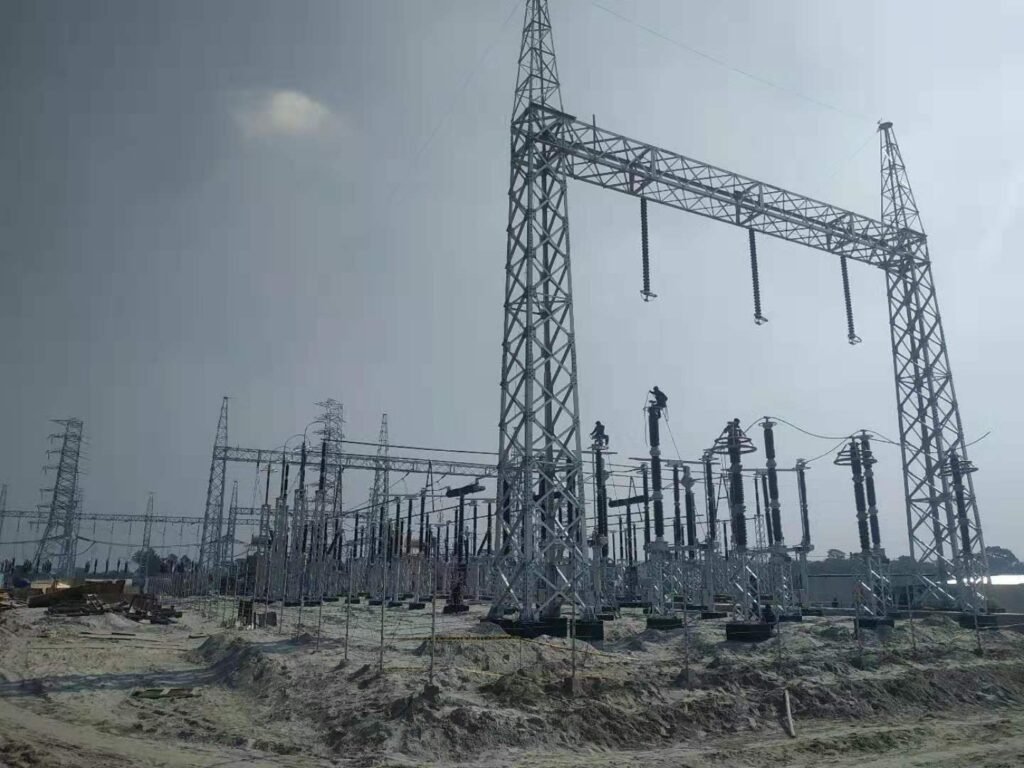
Relevant Cable Products Used in Substations
Substations are the core hub of power transmission and distribution systems, responsible for transforming voltage, distributing electrical energy, and ensuring the safe and stable operation of the power grid. Cables, as the “blood vessels” of substations, undertake the task of transmitting electrical energy, transmitting control signals, and connecting various electrical equipment. According to the functional requirements of different parts of the substation, a variety of cable products with different specifications and performances are needed. The following is a detailed introduction to the main cable products used in substations.
1. Power Cables: The Core of Electrical Energy Transmission
Power cables are the most important type of cable in substations, mainly used to transmit high-voltage and large-current electrical energy between transformers, switchgear, busbars and other key equipment, as well as between substations and power transmission lines. According to the voltage level and insulation type, the power cables commonly used in substations are divided into the following categories:
1.1 High-Voltage Power Cables
High-voltage power cables are mainly used in the high-voltage side of substations (usually 110kV, 220kV, 500kV and above) to connect transformers, high-voltage circuit breakers, disconnecting switches and other equipment. They have the characteristics of high insulation performance, pressure resistance, heat resistance and corrosion resistance to adapt to the harsh working environment of high voltage and large current.
Common types include cross-linked polyethylene (XLPE) high-voltage power cables, which have the advantages of light weight, good mechanical properties, excellent electrical insulation performance and long service life, and are widely used in modern substations. In addition, for some special scenarios (such as underground laying in humid areas), oil-immersed paper-insulated high-voltage power cables are also used, which have strong water resistance and anti-aging performance.
1.2 Medium-Voltage Power Cables
Medium-voltage power cables are used in the medium-voltage side of substations (10kV, 35kV) and the distribution link inside the substation, responsible for transmitting electrical energy from the low-voltage side of the transformer to the distribution switchgear and then to the outgoing line. The most commonly used type is the XLPE medium-voltage power cable, which has the characteristics of high transmission efficiency, low loss and easy installation. It is suitable for both indoor and outdoor laying, and can meet the power distribution needs of various equipment in the substation.
1.3 Low-Voltage Power Cables
Low-voltage power cables are used in the low-voltage area of substations (below 1kV), mainly for connecting low-voltage switchgear, control cabinets, auxiliary equipment (such as fans, pumps, lighting) and other components, providing power for the daily operation of these equipment. Common types include PVC-insulated power cables and XLPE-insulated low-voltage power cables. PVC-insulated cables are low-cost and easy to process, suitable for indoor dry environments; XLPE-insulated cables have better heat resistance and aging resistance, and are suitable for occasions with higher temperature requirements (such as near transformers).
2. Control Cables: The “Nerve” of Equipment Control
Control cables are mainly used to transmit control signals, command signals and measurement signals between various electrical equipment in substations, such as between control cabinets, protection devices, circuit breakers, and instrument transformers. They ensure the coordinated operation of each equipment and the accurate transmission of monitoring and control signals, which is crucial to the safe and reliable operation of the substation.
The core requirements of control cables are good anti-interference performance, stable signal transmission, and certain mechanical strength. Common types include PVC-insulated control cables, XLPE-insulated control cables, and shielded control cables. Among them, shielded control cables are widely used in substations because they can effectively prevent electromagnetic interference from high-voltage equipment and ensure the accuracy of signal transmission. The shielding layer is usually made of copper wire braid or aluminum foil, which can isolate external electromagnetic signals and avoid signal distortion.
In addition, according to the number of cores, control cables can be divided into single-core, multi-core and multi-pair control cables. Multi-core and multi-pair control cables are more commonly used in substations, which can integrate multiple signal transmission lines into one cable, reducing the number of cables laid and facilitating installation and maintenance.
3. Instrumentation Cables: Accurate Transmission of Measurement Signals
Instrumentation cables are a special type of control cable, mainly used to connect measuring instruments, transmitters, sensors and other equipment in substations, such as current transformers (CT), voltage transformers (VT), power meters, and temperature sensors. They are used to transmit accurate measurement signals (such as current, voltage, temperature, pressure) to the monitoring system and control cabinet, providing data support for the operation monitoring and fault diagnosis of the substation.
Instrumentation cables have higher requirements for signal transmission accuracy and anti-interference performance than ordinary control cables. They are usually shielded cables, and some high-precision scenarios will use double-shielded instrumentation cables to further improve anti-interference ability. Common insulation materials include PVC, XLPE and fluoroplastic. Fluoroplastic-insulated instrumentation cables have excellent high-temperature resistance and corrosion resistance, and are suitable for harsh environments such as high temperature and chemical corrosion in substations.
4. Communication Cables: Guarantee of Information Interaction
With the development of intelligent substations, communication cables have become an indispensable part of substations, mainly used to realize information interaction between various intelligent equipment, between substations and the control center, including data transmission, remote control, video monitoring and other functions. Common communication cables used in substations include the following types:
4.1 Optical Fiber Cables
Optical fiber cables are widely used in modern intelligent substations due to their advantages of high transmission speed, large bandwidth, strong anti-interference ability, and low signal loss. They are mainly used to transmit large amounts of data such as monitoring signals, control signals, and video signals between the substation control system, intelligent terminal equipment, and the upper-level power grid control center. Common types include single-mode optical fiber cables and multi-mode optical fiber cables. Single-mode optical fiber cables have longer transmission distance and higher transmission efficiency, suitable for long-distance communication between substations; multi-mode optical fiber cables are suitable for short-distance communication inside substations.
4.2 Twisted Pair Cables
Twisted pair cables are mainly used for short-distance communication inside substations, such as connecting intelligent instruments, switches, and video cameras. They have the advantages of low cost, easy installation and maintenance. Common types include unshielded twisted pair (UTP) and shielded twisted pair (STP). Shielded twisted pair cables have better anti-interference performance and are suitable for occasions with strong electromagnetic interference (such as near high-voltage equipment).
5. Key Requirements for Substation Cables
Since substations are important power facilities, the cables used must meet strict quality and performance requirements to ensure long-term safe and stable operation:
-
Electrical performance: Good insulation performance, pressure resistance, and low loss to avoid electrical breakdown and energy waste.
-
Mechanical performance: Strong tensile strength, compressive strength, and bending performance to adapt to laying and installation conditions and prevent mechanical damage.
-
Environmental adaptability: Resistance to high temperature, low temperature, humidity, corrosion, and aging to adapt to the harsh working environment of substations (such as high temperature near transformers, humidity in underground cable trenches).
-
Safety performance: Fire resistance, flame retardancy, and non-toxicity to reduce the risk of fire and environmental pollution.
In summary, the cable products used in substations cover power transmission, control, measurement, communication and other fields, and each type of cable plays an irreplaceable role. Choosing the appropriate cable products according to the voltage level, functional requirements, and working environment of the substation is the key to ensuring the safe, stable, and efficient operation of the substation.